
Smarter Asset Management for Your Organization
Track, maintain, and optimize all your assets with ease. Improve efficiency, reduce costs, and maximize the value of your resources through intelligent asset management.
Send Us Your Requirements
Overview of Asset Management System
Streamlined Operations
Asset Management systematically tracks and optimizes an organization’s physical assets throughout their lifecycle—from acquisition and deployment to maintenance, transfer, and disposal. Moreover, by providing comprehensive oversight, the Asset Management System offers real-time visibility, enforces compliance, and enables strategic, data-driven decisions. Consequently, organizations can manage assets more efficiently and with greater accuracy.
Importance of Asset Managment
Visibility & Control
By centralizing asset information, you can monitor what you own, where it is
Cost Optimization
Monitors depreciation and maintenance costs to optimize replacement schedules and budgeting.
Compliance & Audit
It also automatically calculates depreciation and tracks audit trails for reporting.
Risk Reduction
Identifies under‑utilized or failing assets early, reducing downtime and operational risk.
Benefits for Organizations and Stakeholders
This system serves as the core platform for stakeholders, ensuring efficient management, clear oversight, and seamless operations throughout the organization.
Finance Teams
Achieve accurate depreciation schedules for financial reporting while enabling predictable budgeting through maintenance forecasting.
Operations & Maintenance
Reduce unplanned downtime by implementing proactive servicing schedules.
IT & Facilities
Simplify transfers between locations or branches and ensure clear workflows for retiring obsolete or end-of-life assets.
Executive Leadership
Gain data-driven insights into asset utilization and lifecycle costs, helping to optimize the timing of asset replacements and improve profits.
Stakeholders & Auditors
Keep transparent audit trails to monitor asset creation, movements, and disposals.

Why Choose Chipsy Services
For Asset Management?
Chipsy’s Asset Management System offers clear and measurable advantages for organizations and their stakeholders. Finance teams benefit from accurate reporting and predictable budgets. Meanwhile, operations enjoy proactive maintenance and significantly reduced downtime. IT and facilities departments experience streamlined transfer and disposal workflows. Executives gain valuable insights to optimize costs. Auditors benefit from transparent asset records. Ultimately, these features drive efficient, data-driven decision-making across the organization.
Modules and its Features
Manage and Audit Assets
Manage Assets: Add, edit, view, retire
Asset Audit: Automate depreciation calculations for accurate financial tracking.
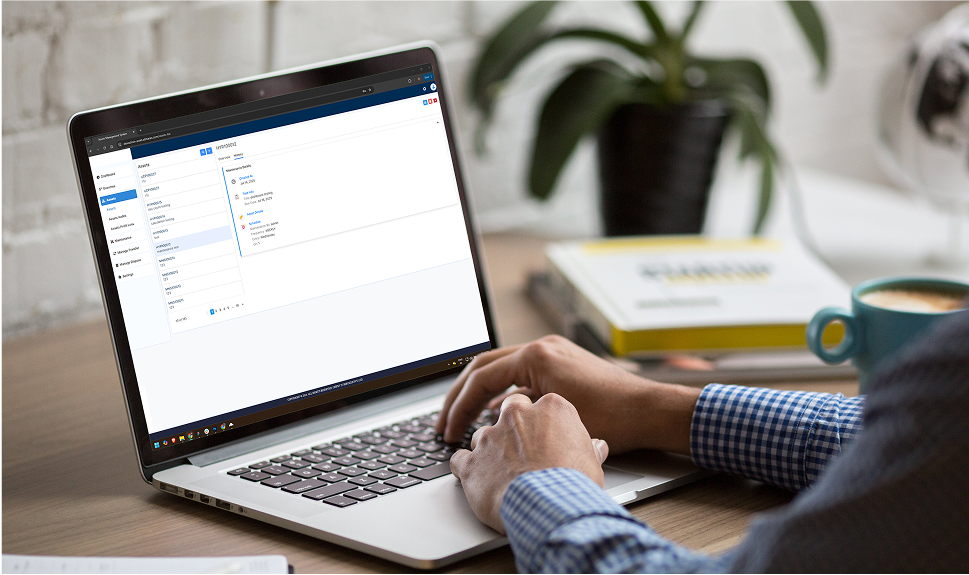
Asset History: Access a complete log of an asset’s lifecycle events—from creation through maintenance, transfers, and disposal.
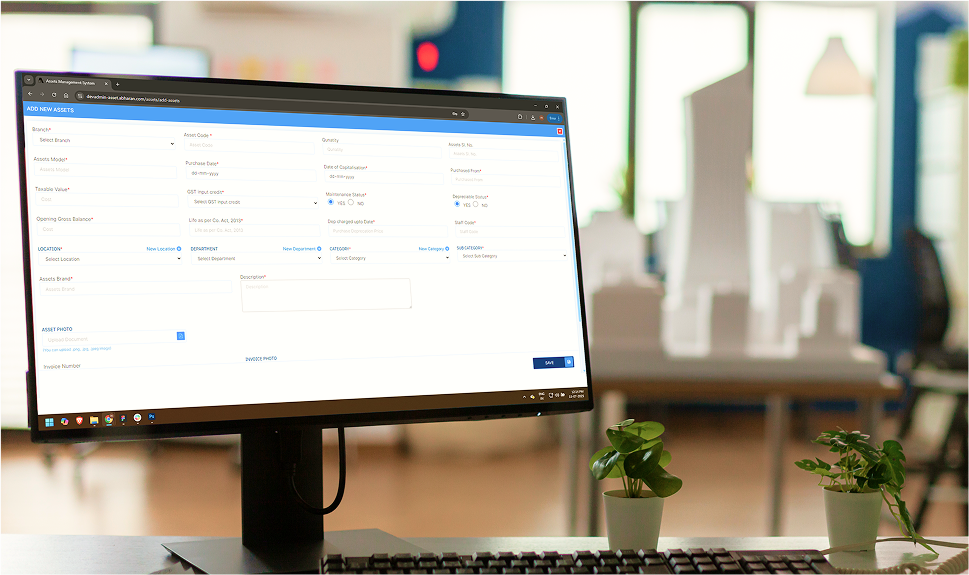
Audit and Depreciation
Compute and update asset depreciation based on audit findings using standard accounting methods:
- Straight Line Method (SLM)
- Written Down Value (WDV)
Calculates audit-based depreciation.
Receive updated book values automatically.
Highlights differences between system and physical asset counts.
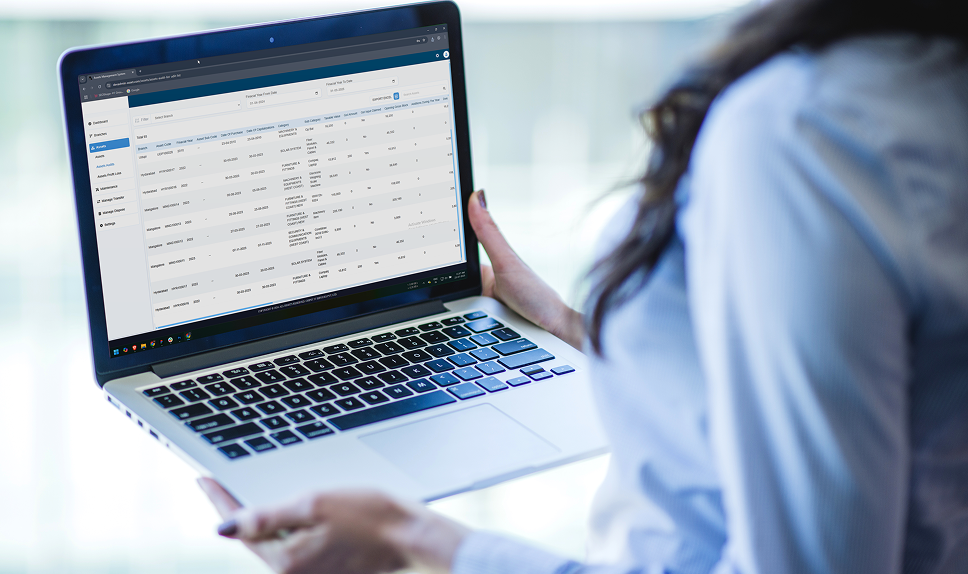
Maintenance Module: List and schedule Services
Maintenance List: Displays Asset list
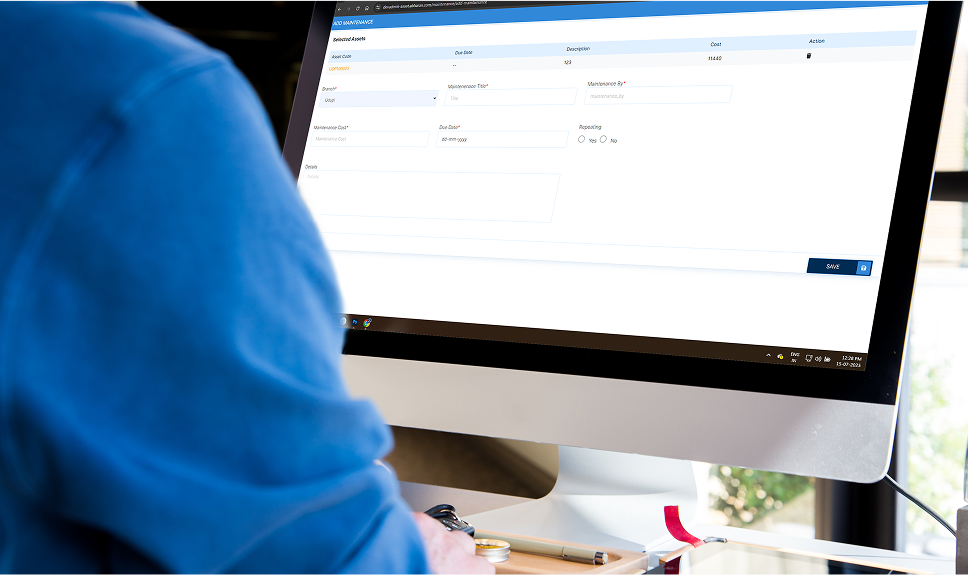
Add Maintenance: Schedule, assign, and log service events and costs
Maintenance Services: Perform scheduled or on-demand actions—such as inspections, repairs, servicing, and parts replacements—to keep assets in optimal condition.
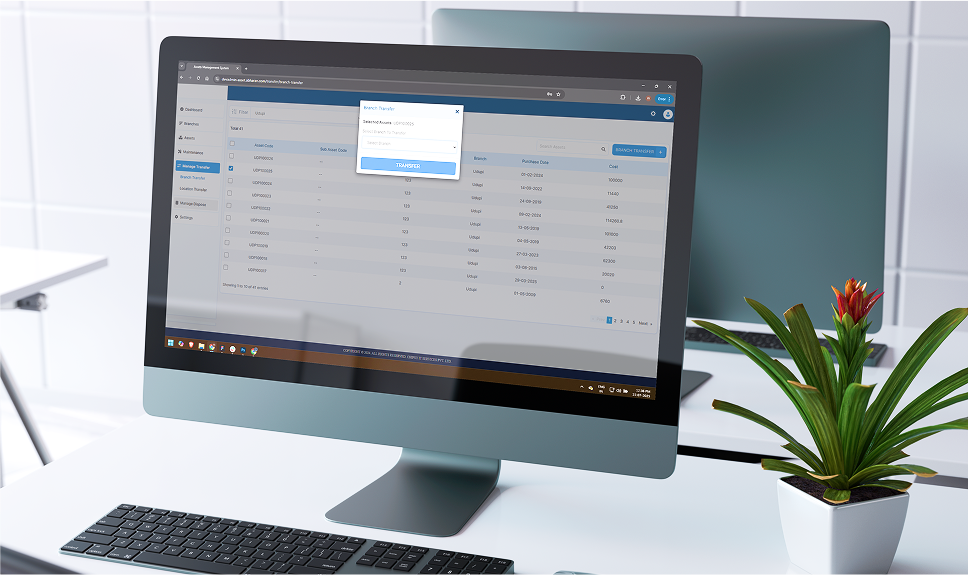
Transfer Module: Manage Transfers
Branch Transfer: Initiate and approve/reject inter‑branch moves
Location Transfer: Initiate transfers between locations.
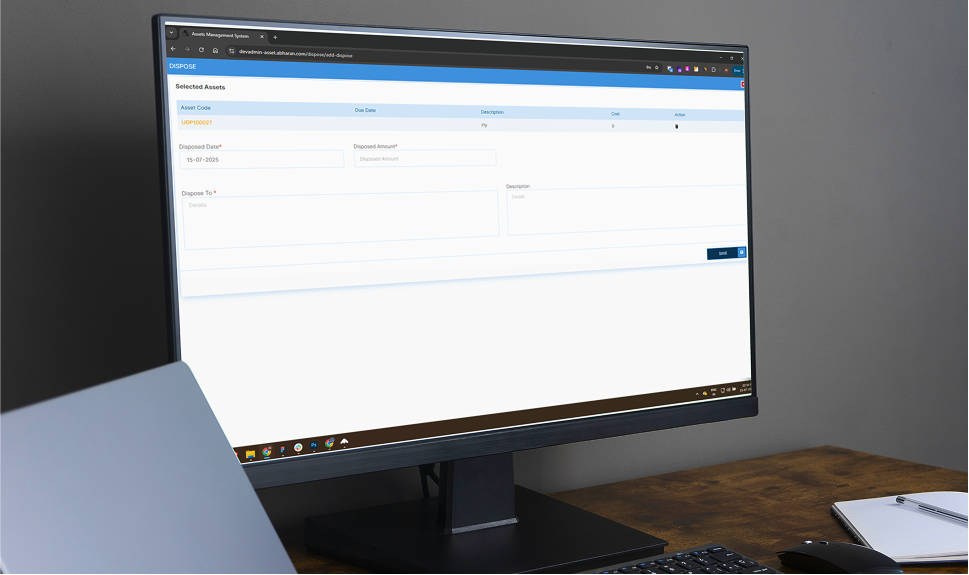
Dispose Module
Manage Dispose: Initiate disposal with reason and price
Dispose List: Record of all disposed assets
Asset History tracks every lifecycle event (creation, maintenance, transfers, disposal) for complete traceability
Category: Defines broad groupings for assets
Subcategory Creation: Granular classifications within each category
Location Creation: Sets up the physical places where assets are used (eg: Floor)
Department Creation: Establishes the organizational units responsible for assets (e.g., IT Department,Facilities)
Experience Smarter Asset
Management
Discover how our integrated system can also improve your organization’s efficiency, transparency, and decision-making.

Frequently Asked Questions (FAQ)
What is an Asset Management System?
An Asset Management System helps organizations track, maintain, and optimize their physical assets throughout their lifecycle — from purchase to disposal.
Why is effective asset management crucial for organizations?
It ensures visibility, control, and optimal use of assets, reducing costs, improving efficiency, and minimizing risks.
Which key features are included in the system?
The system offers modules for managing assets, scheduling maintenance, tracking transfers, recording disposals, and preserving complete asset histories.
Can it handle assets across multiple locations?
Yes, the system supports branch and location transfers, making it easy to manage assets across sites.
In what ways does the system minimize downtime and maintenance problems?
By scheduling proactive maintenance and tracking service history, it minimizes unplanned outages and extends asset life.
Is the system suitable for organizations of all sizes?
Absolutely, the system can be customized to suit the requirements of small, medium, and large-scale organizations.
How does it ensure data accuracy and compliance?
It delivers instant asset insights, automates depreciation tracking, and maintains thorough audit records to support compliance standards.
Does it allow tracking of an asset’s complete lifecycle?
Yes, it record every event in an asset’s lifecycle — including creation, maintenance, transfers, and disposal.
What support does it provide for audits and detailed reporting?
Transparent audit trails and precise reports are generated, ensuring faster and more reliable audit processes.
Which advantages does a cloud-based asset management solution offer?
Accessible from anywhere, it provides real-time updates and secure data storage while eliminating the need for complex infrastructure.
How can an organization get started with asset management?
You can get started by reaching out to our team for a demo, consultation, and a smooth onboarding process tailored to your needs.